
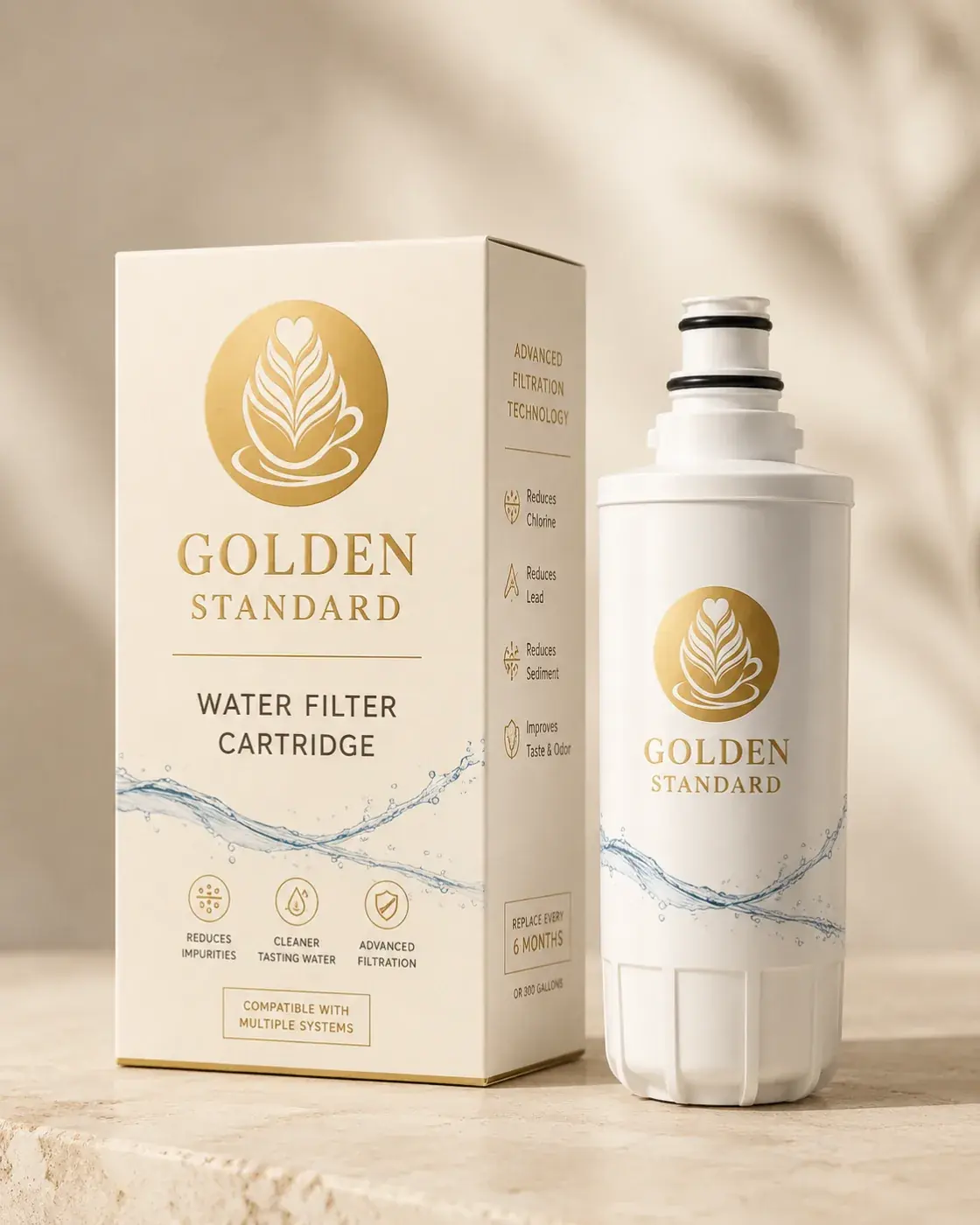
Water is the largest ingredient in a finished espresso by volume and the medium through which we extract aroma, acidity, sweetness, and bitterness from coffee. Therefore, good coffee, a precise grinder, and a correct recipe cannot fully compensate for water that is not adapted to coffee preparation and the specific machine.
Minerals change extraction and flavour
Natural water contains dissolved minerals. Their total quantity and ratio affect what the water extracts from ground coffee and how we perceive acidity and bitterness. Alkalinity acts as a buffer: a value that is too high can dampen desirable acidity and make the cup flat, while unadjusted water can produce inconsistent results even when the recipe remains the same.
Hardness also affects the machine
The minerals that are important in the cup also contribute to scale build-up. Deposits can reduce flow and heat transfer, increasing the need for maintenance. On the other hand, the goal is not to create completely demineralised water without verification: filtration must match the inlet water, the machine's specifications, and the desired extraction profile.
Why two locations require different settings
The composition of mains water varies between cities, but it can also change seasonally or following network maintenance. A filter selected solely based on the machine model is therefore insufficient. First, the inlet water is measured, then the capacity and type of treatment are selected, and the recipe is confirmed in the cup.
What needs to be checked
- Total and carbonate hardness, i.e., alkalinity.
- Total dissolved solids, with the understanding that TDS alone does not describe their composition.
- The presence of chlorine or other odours and tastes that can transfer to the drink.
- Manufacturer requirements for the machine and warranty conditions.
- Cartridge capacity based on measured water and actual monthly consumption.
Symptoms the team may notice
- Espresso becomes dull, overly bitter, or lacks clear acidity even though the beans and recipe have not changed.
- The same recipe requires frequent adjustments between locations or throughout the year.
- Limescale appears on outlets, the boiler, or other parts.
- Water or the drink has a noticeable smell of chlorine or another foreign taste.
- Flow and temperature become less stable, requiring a technical check.
Practical routine for the venue
Record the initial water values at installation, the date the filter was installed, and the estimated capacity. Monitor consumption, change the cartridge according to specifications and actual conditions, and re-verify the espresso recipe after every change in water or filtration. For multiple locations, keep data separate — the same equipment does not automatically mean the same water.
Professional source: Water and the Taste of Coffee — Specialty Coffee Association
Solution for your venue: View Golden Standard filtration