Classic hot foam remains the foundation of cappuccinos, flat whites, and lattes. Cold microfoam serves a different purpose: it provides structure to a cold beverage without the need to heat and subsequently cool the milk. For a business owner, this difference is not merely visual — it determines which drinks can be added to the menu and how consistently the team can prepare them during peak hours.
What we mean by classic hot foam
In classic preparation, milk is simultaneously heated and aerated. High-quality microfoam features very fine bubbles, a glossy surface, and a texture that integrates with the espresso rather than sitting on top as a dry layer. The temperature and the amount of air introduced must match the recipe — a cappuccino and a flat white do not require the same foam thickness.
What makes cold microfoam different
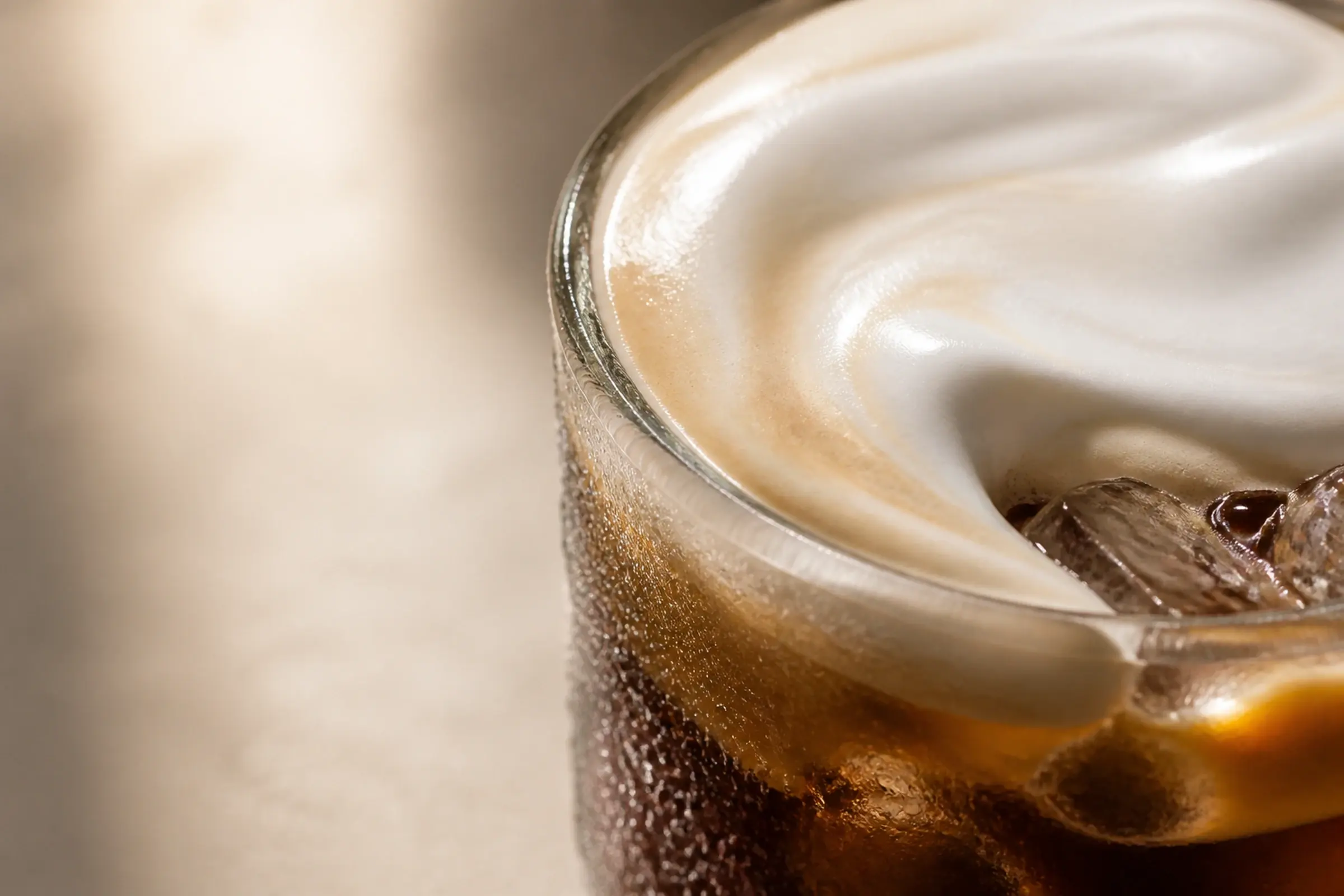
Cold microfoam is created without turning milk into hot foam that then needs cooling. It retains the cold character of the drink and provides a fine, creamy finish. In the Golden Standard system, it is prepared directly from the machine according to preset parameters, giving cold coffee recipes their own standard rather than relying on improvisation with a shaker or manual frother.
Comparison from a menu perspective
- Hot microfoam: cappuccino, flat white, latte, and hot signature drinks.
- Cold microfoam: iced latte, cold cappuccino, and seasonal cold recipes.
- Hot foam emphasises a sense of warmth and body; cold foam preserves the refreshing profile of the drink.
- Both require a defined quantity, texture, and ratio to the espresso — they simply serve different roles.
Comparison from a workflow perspective
Manual preparation depends on the technique of the individual barista. This can be an advantage in a speciality bar with experienced staff, but it becomes an operational risk when shifts change rapidly, the number of locations grows, or the cold menu sees high volume. Programmed preparation does not replace coffee knowledge; it takes over the repetition of texture and temperature so the barista can focus on the espresso, presentation, and the guest.
Which one is better
Neither is universally better. Hot microfoam is the right choice for hot classics, while cold microfoam opens up a category of drinks that a classic steam wand cannot address in the same way. From a business perspective, the strongest menu is one that gives each technique a clear role, rather than trying to use the same process for everything.
How to decide if cold microfoam makes sense for your venue
- Review the share of cold drinks during warmer months.
- Measure how long current preparation takes and how many steps it requires.
- Check if the result depends on one particularly experienced individual.
- Test two or three cold recipes that can be clearly sold, not just demonstrated.
- Monitor sales, preparation time, and repeat orders during a pilot period.
More about the system: See how hot and cold microfoam work
Equipment: View equipment for professional service