Choosing milk for a café goes beyond the milk fat percentage on the label. In professional service, milk must work well with a specific espresso, maintain texture in the actual cup, and provide a repeatable result when shifts and pace change. That is why there is no single formula that is best for every venue — there is a formula that best suits your menu and way of working.
First, define what the milk needs to do
Before tasting, write down where milk currently contributes to your sales. A venue that serves mostly cappuccinos throughout the day has different priorities than a venue with a strong summer cold coffee menu or a high share of plant-based drinks.
- Which three milk-based drinks sell the most and in what sizes?
- What percentage of sales are hot drinks, and what percentage are cold?
- How often do guests ask for a plant-based alternative?
- Where do leftovers, spills, or re-preparations occur today?
- Does the same recipe yield the same taste and texture in every shift?
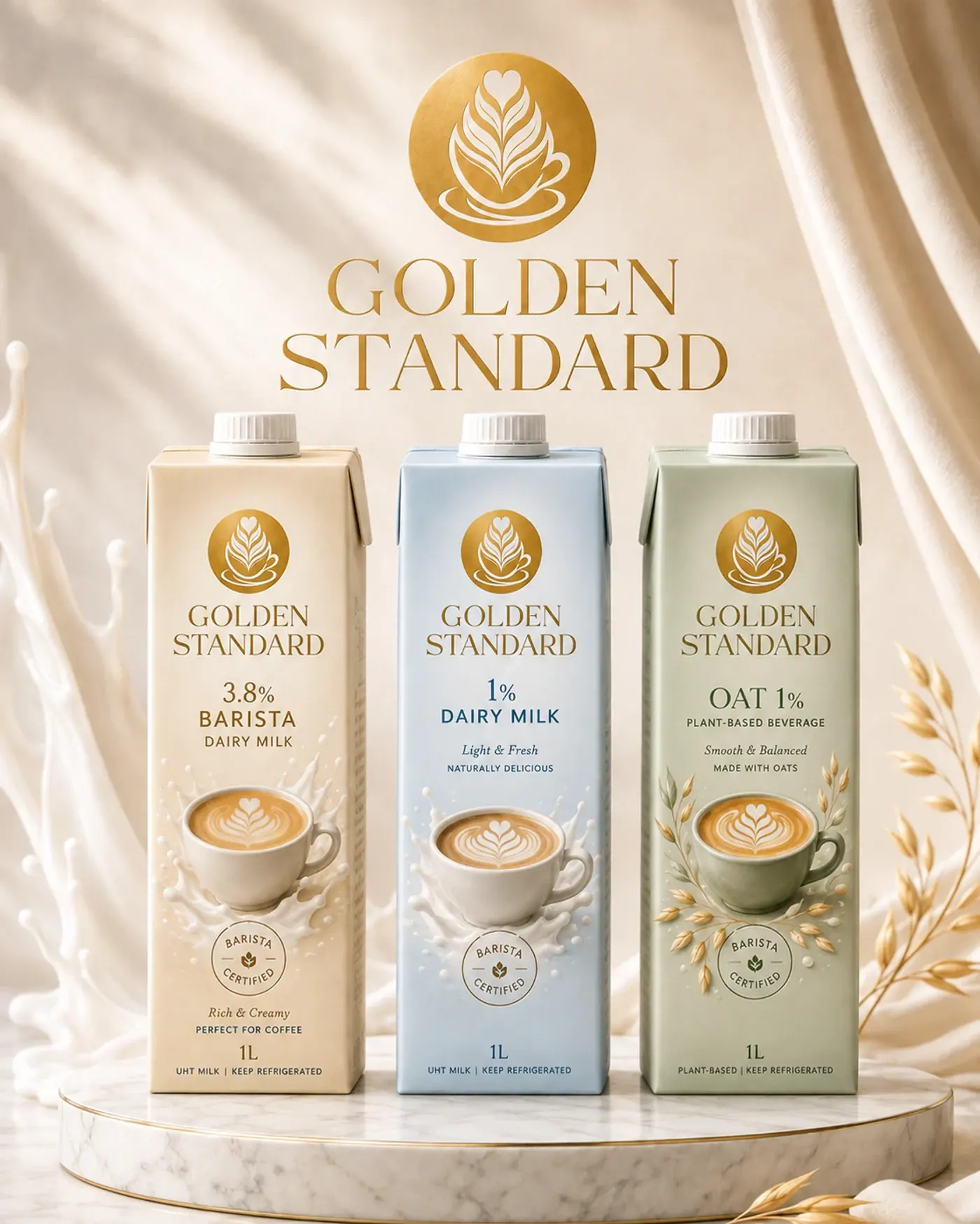
Barista Premium 3.8: richness for the classic espresso menu
A full-fat barista formula is the natural choice when cappuccinos, flat whites, and lattes are at the centre of the menu. The goal is not for the milk to mask the espresso, but to add body, sweetness, and fine, glossy microfoam. During the test, try the drink while fresh, but also after a few minutes — a guest rarely drinks the whole cup immediately.
Low Fat: especially important for cold foam
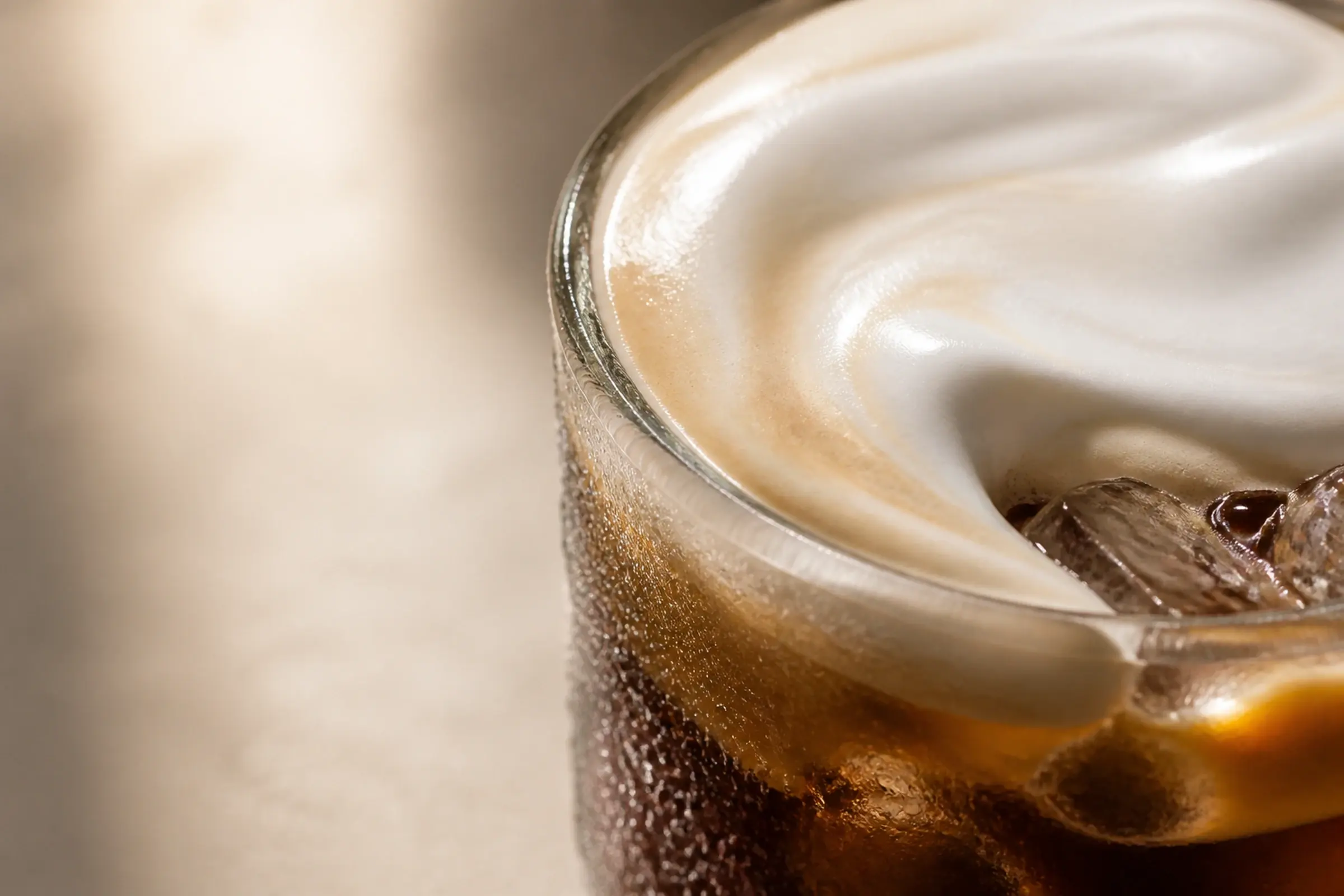
The Golden Standard Low Fat formula is intended for a lighter profile, and in the Golden Standard system, it stands out particularly in the preparation of cold foam. This is an important distinction for venues that want iced lattes, cold cappuccinos, and signature cold drinks without a heavy finish. Do not evaluate it only as a lower-fat substitute: test it as a separate tool for your cold coffee menu.
Oat Barista: the plant-based option must be part of the standard
A plant-based drink is not an add-on that should work 'well enough'. If it is on the menu, the guest expects the same attention to texture, temperature, and balance with the espresso. Oat Barista should be tested with the same bean and the same recipe as the dairy formulas, because the acidity and character of the espresso can react differently in the final drink.
How to conduct a test that counts for a business decision
Conduct a small internal cupping of milk-based drinks. Use the same espresso, the same amount of milk, the same cup, and a pre-defined texture. Try each formula in one hot and one cold recipe. Then, record the taste, gloss and fineness of the foam, stability after five minutes, preparation time, and the amount of milk left unused.
- Taste with espresso — are bitterness, sweetness, and acidity in balance?
- Texture — is the microfoam fine, glossy, and appropriate for the recipe?
- Stability — how does the drink look and feel after a few minutes?
- Workflow — how easy is it to repeat the result during peak hours?
- Yield — how many drinks are obtained from an opened pack at the actual waste level?
The price of a pack is not the same as the cost per served cup
A cheaper pack can be more expensive if it creates more waste, slower preparation, or more re-made drinks. The business-relevant measure is the cost per correctly served drink. Only when yield, waste, and labour time are recorded alongside the price of the milk can two formulas be fairly compared.
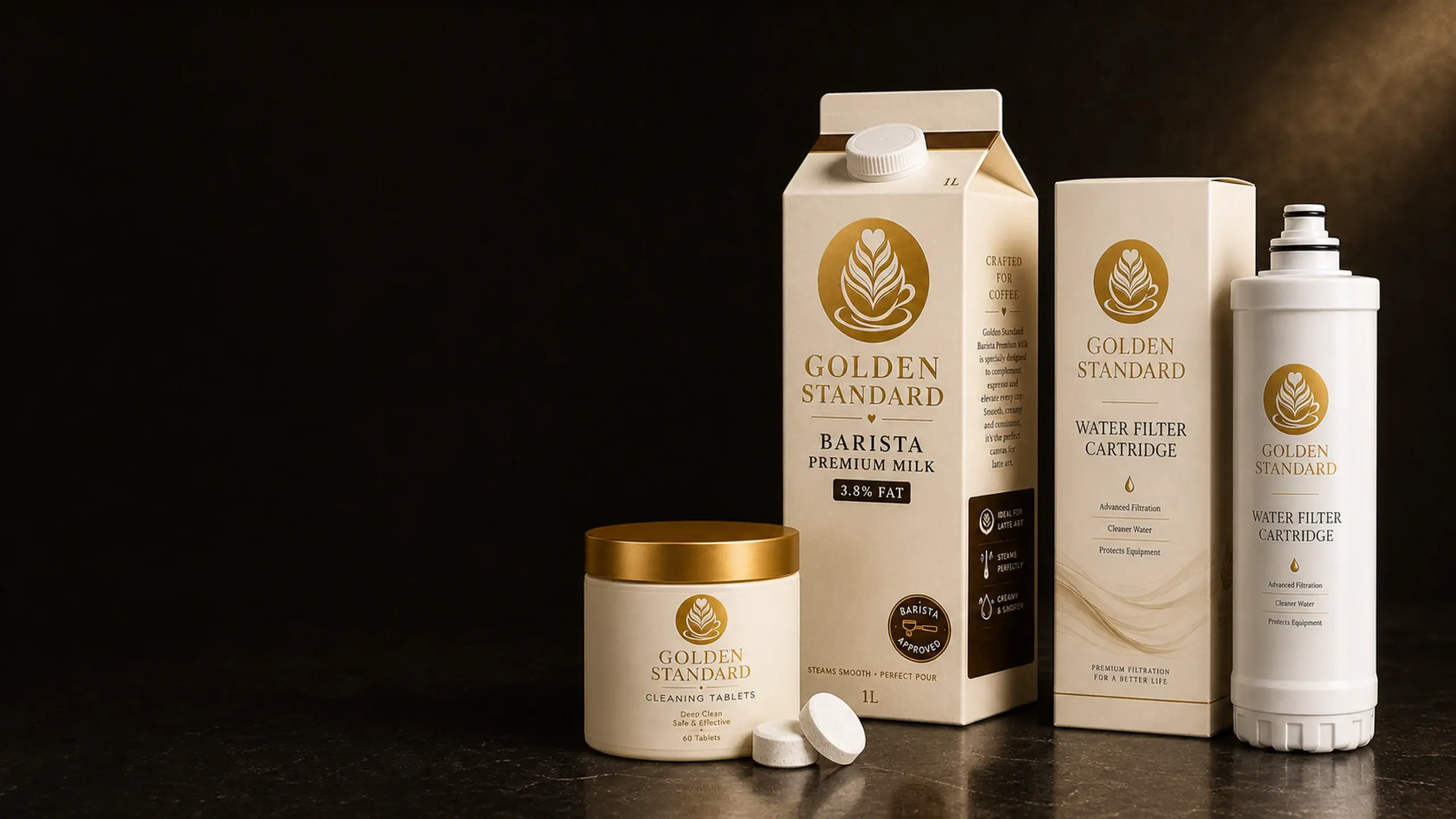
Next step: See the Golden Standard barista formulas
For a test at your premises: Request a menu and system assessment