
Milk temperature is not a matter of habit or comfort. It determines the texture you achieve, the flavour of the drink, and how much of the coffee's character actually comes through. Once milk is overheated, it cannot be fixed — not by cooling, re-steaming, or using a stronger espresso. This is why temperature is treated as a recipe parameter, just like coffee dose and extraction time. The 55 °C to 65 °C window is that parameter, and there are four reasons for it.
Peak natural sweetness
Within the 55 °C to 65 °C window, milk is at its naturally sweetest: lactose is most clearly perceived on the palate, meaning the drink requires no added sugar. Below 55 °C, the sweetness does not develop — the milk feels lukewarm and flat. Above 70 °C, it is lost, along with the balance that gives a milk-based drink its body; what remains is an empty, bitter base.
Microfoam stability and structure
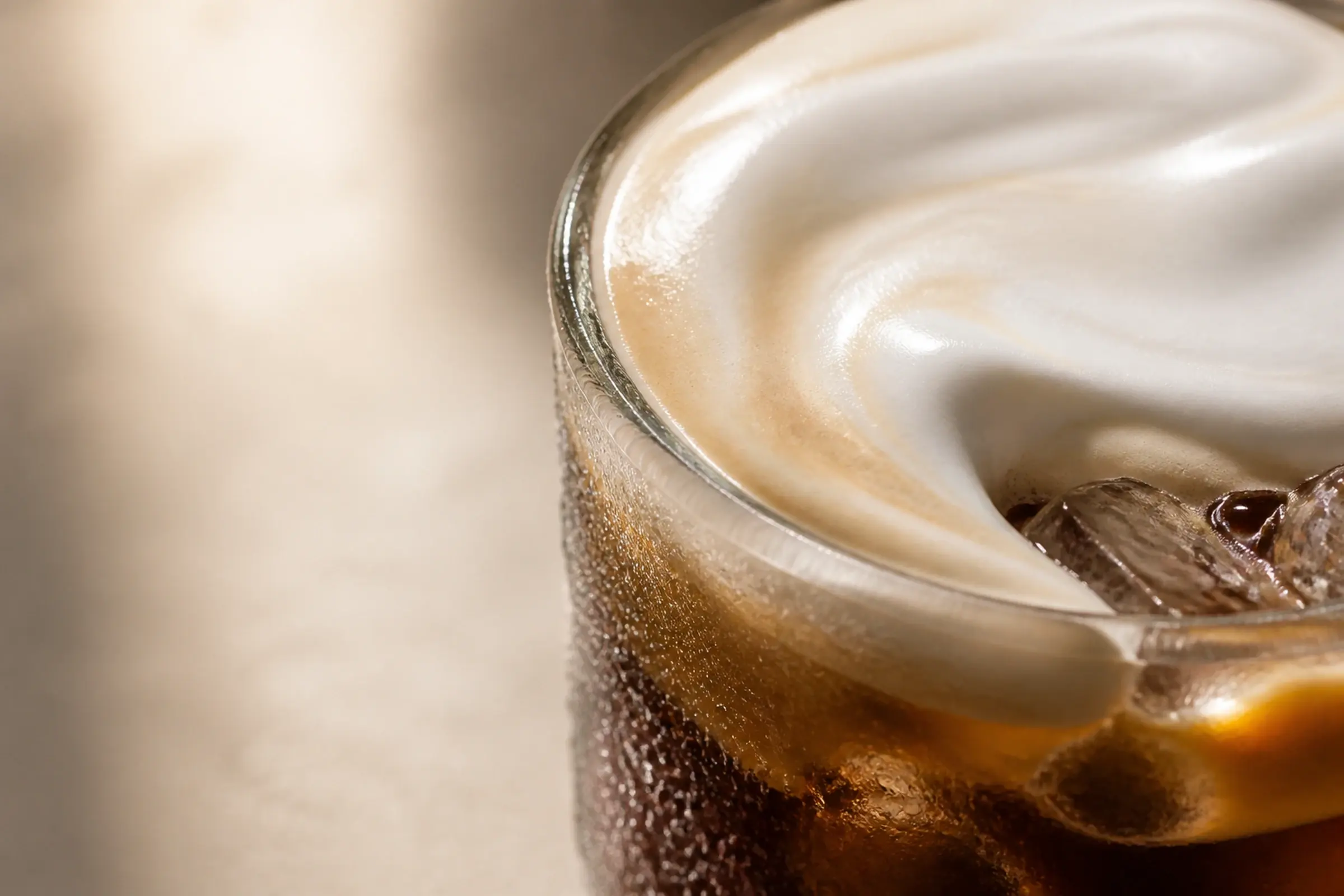
Heating causes milk proteins — casein and whey — to unfold, coat air bubbles, and create a stable foam. Between 55 °C and 65 °C, these proteins denature ideally to form an elastic, silky microfoam: tiny bubbles, a glossy surface, and a texture that integrates with the espresso rather than sitting on top as a dry layer. If you exceed 70 °C, the protein structure collapses completely — the foam becomes coarse, full of large bubbles, and dissipates quickly.
No boiled milk taste or smell
At temperatures above 68 °C to 70 °C, sulphur-containing proteins — particularly beta-lactoglobulin — begin to break down and release sulphur compounds. This gives the milk an undesirable, burnt taste and the smell of boiled milk, which dominates the aromas of the espresso itself. The guest does not identify this as a temperature error; they identify it as bad coffee.
Preserving coffee aromas
Extremely hot milk, over 70 °C, neutralises delicate acids and the fruity and floral notes in specialty coffee, leaving only bitterness. All the work put into the bean, roasting, and extraction is wasted at the final step — in the milk component of the drink, after everything else was done correctly.
Why 60 °C is ready to drink
A drink prepared at 60 °C is ready to consume immediately, without the risk of tongue burns that temporarily reduce the sensitivity of taste buds. The guest does not have to wait for the cup to cool, and they experience the first sip with their full sense of taste. This is also an operational difference: the drink is consumed at the table, not lukewarm on the way out.
The window in numbers
- Below 55 °C — sweetness does not develop: the milk is lukewarm, flat, and thin in body.
- 55–65 °C — the working window for warm microfoam: peak natural sweetness, elastic texture, glossy surface, clear coffee aromas.
- Around 60 °C — ready to drink immediately, without burns and without loss of taste sensitivity.
- 68–70 °C — the threshold beyond which sulphur compounds are released and the boiled milk flavour appears.
- Over 70 °C — sweetness is lost and protein structure collapses: coarse foam, large bubbles, rapid dissipation, and bitterness.
Why the window is missed in real-world service
Manual steaming is judged by the palm on the pitcher, and milk continues to heat even after the steam is turned off. During a rush, the steam wand is held a second too long, leftover milk is re-steamed, and every shift has its own measure of 'warm enough'. Temperature deviation is therefore not a rare incident but the most common silent error in a milk-based menu — one that isn't complained about, but is reflected in how often a guest returns.
What this means for your establishment
In the Golden Standard system, temperature is written into the recipe, not left to the judgement of the person behind the bar. FoaMaster prepares microfoam at the specified texture and temperature, MilkPal maintains dosing and milk flow, and Academy teaches the team to recognise texture, the aromatic signs of overheating, and the moment when the result no longer meets the standard. The 55–65 °C window thus ceases to depend on the shift.